UKGovCamp
Inviting New Voices and Designing for Participation and Change
UKGovCamp is an annual unconference where people from across government, public services, and the civic sector come together to share ideas, learn from each other, and explore how to make government better. We focused on creating a space where collective power could emerge. The goal wasn’t to direct the event, but to design conditions that allowed participants to co-create, explore, and shape their own experiences.
I joined the organiser team in June 2025, focusing on making the event inclusive, accessible, and welcoming, and fostering long-term engagement. My role involved designing seamless experience, facilitating shared ownership, and introducing small changes that allowed fresh voices to be heard and retained.
Role
UKGovCamp2026: Comms and Engagement Leader
UKGovCamp: Trustee
Team Setup
10 organisers + 20+ volunteers + 200 attendees
Partner(s)
Brimingham City Council
Timeframe
Jun 2025 - present
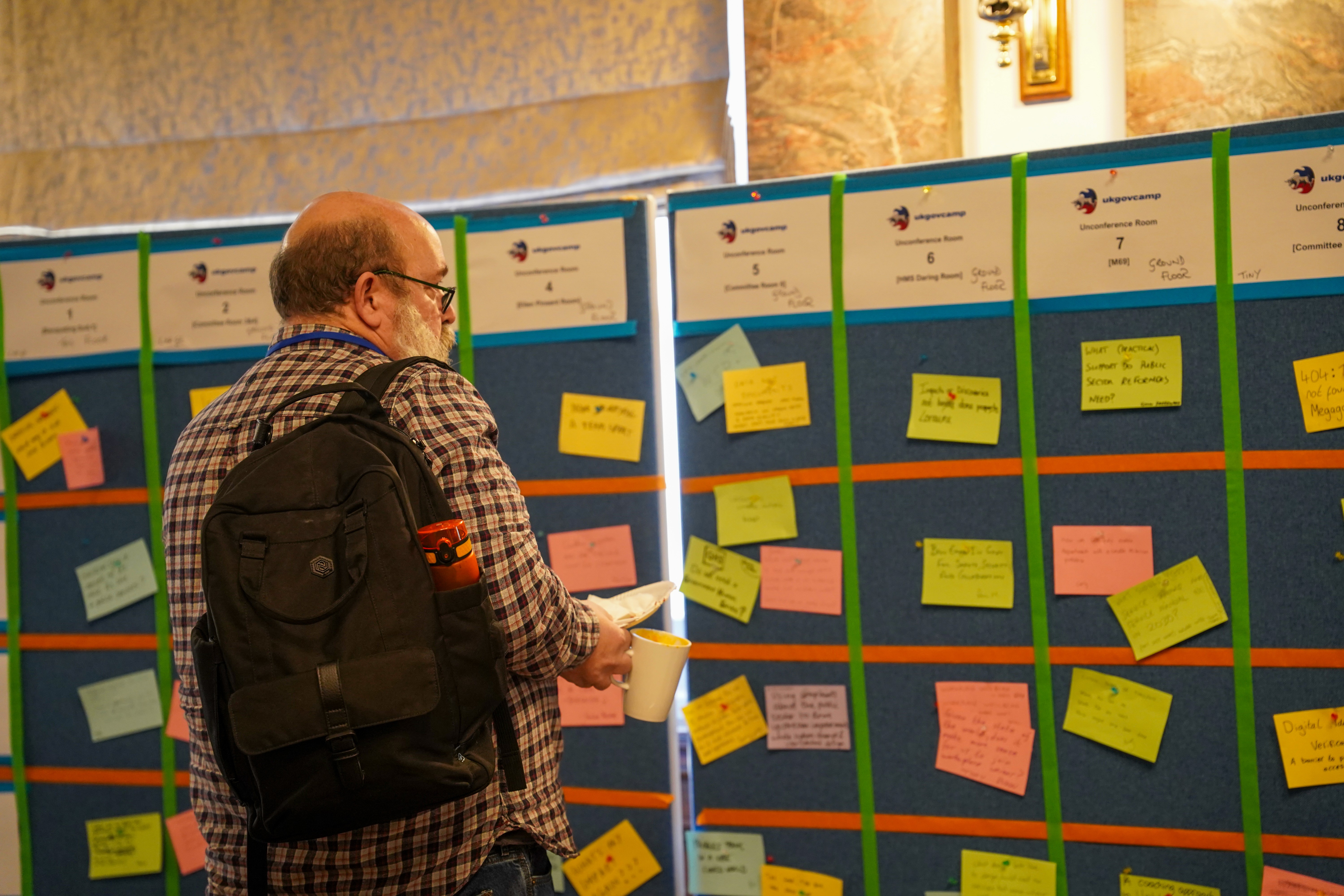
Participants share their ideas on the session board, shaping the event’s agenda. (Photo by Ashlie Camp)
Challenges
Evolving a Legacy Under Time Pressure
For years, we have been hosting the event in London, attracting passionate civil servants and partners who work closely with government. Over time, this created a strong legacy, but it also limited our ability to reach new audiences, weakening inclusivity and the collective power that UKGovCamp aims to bring.
On top of this, we faced a tight timeline. By the time the team are formed, we have only half a year left. Everyone involved was volunteering alongside their own work, leaving limited capacity for coordination and decision-making.
Clear communication and careful coordination were essential to ensure we could deliver the event on time without compromising the quality or the spirit of participation.
Approaches
Enabling Collective Power Under Constraint
To address the challenge, we focused on two connected priorities: making sure UKGovCamp 2026 actually happened within a tight, volunteer-led timeline, and make the event sustainable in the long term, without relying solely on established patterns or familiar audiences.
A big part of our approach was creating opportunities for active participation. Rather than directing everything, we encouraged shared ownership, and made space for new voices. This meant questioning some of the established ways of working and introducing small changes to open up possibilities.
With organisers spread across the UK and volunteering in their own time, clear communication and shared ownership were key. We relied on Slack, Trello, and regular online catch-ups to stay coordinated, while keeping decision-making transparent and collective.
How did we make space for new voices?
We hosted UKGovCamp 2026 in Birmingham, moving beyond London for the first time. This helped broaden geographic reach. We also invited local community members to join the organising team, grounding decisions in local knowledge and diversifying perspectives.
How do we promote share ownership?
The unconference format naturally encourages it: all sessions and panels are created and led by the community rather than by the organisers. To extend this further, we invited anyone interested to take part, whether as an organiser, a volunteer, or a session lead. By opening up these roles, we created a sense of collective responsibility and ensure that the event was shaped by the community, for the community.
How can we make sure the event is accessible and inclusive?
From registration, attendees could share access needs early, allowing proactive support. Venue selection prioritised accessibility, with quiet rooms, prayer rooms, and a crèche available on the day. We also chose to keep the event largely low-tech to reduce participation barriers for people with different access needs.
How can we gather experience and feedback for improvements?
I gathered qualitative insights through informal conversations with attendees, focusing on how they experienced the venue, arrangements, and the future direction of UKGovCamp. After the event, we synthesised feedback from social media posts, post-event surveys, and retrospectives with attendees and volunteers. This ensured learning and improvement remained community-led.
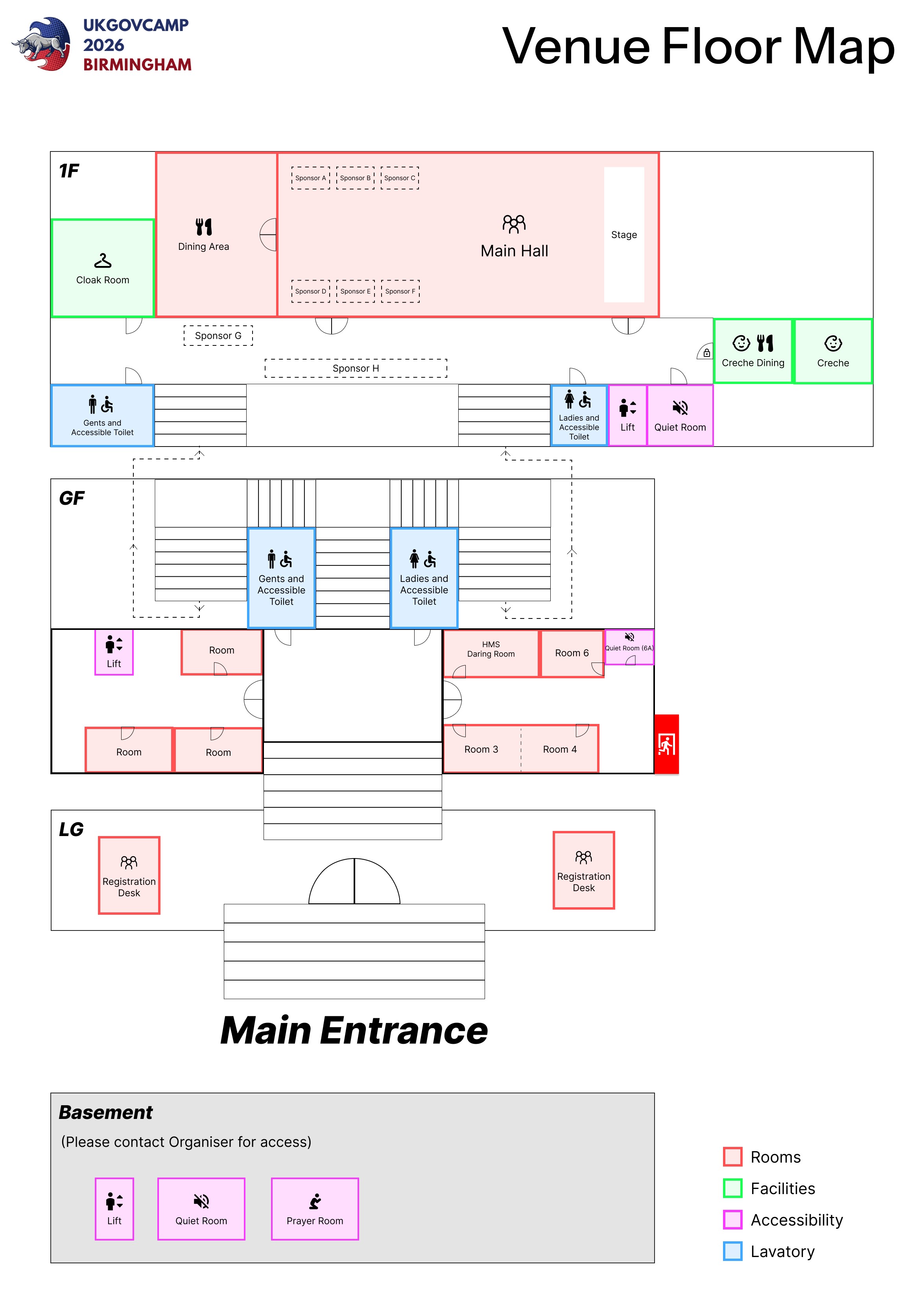
Venue Floor plan of the venue to help people navigate, highlighting different needs for inclusivitiy.
Main Methods
Data Analysis
Service Mapping
1-on-1 Stakeholder Interviews
On-site conversations
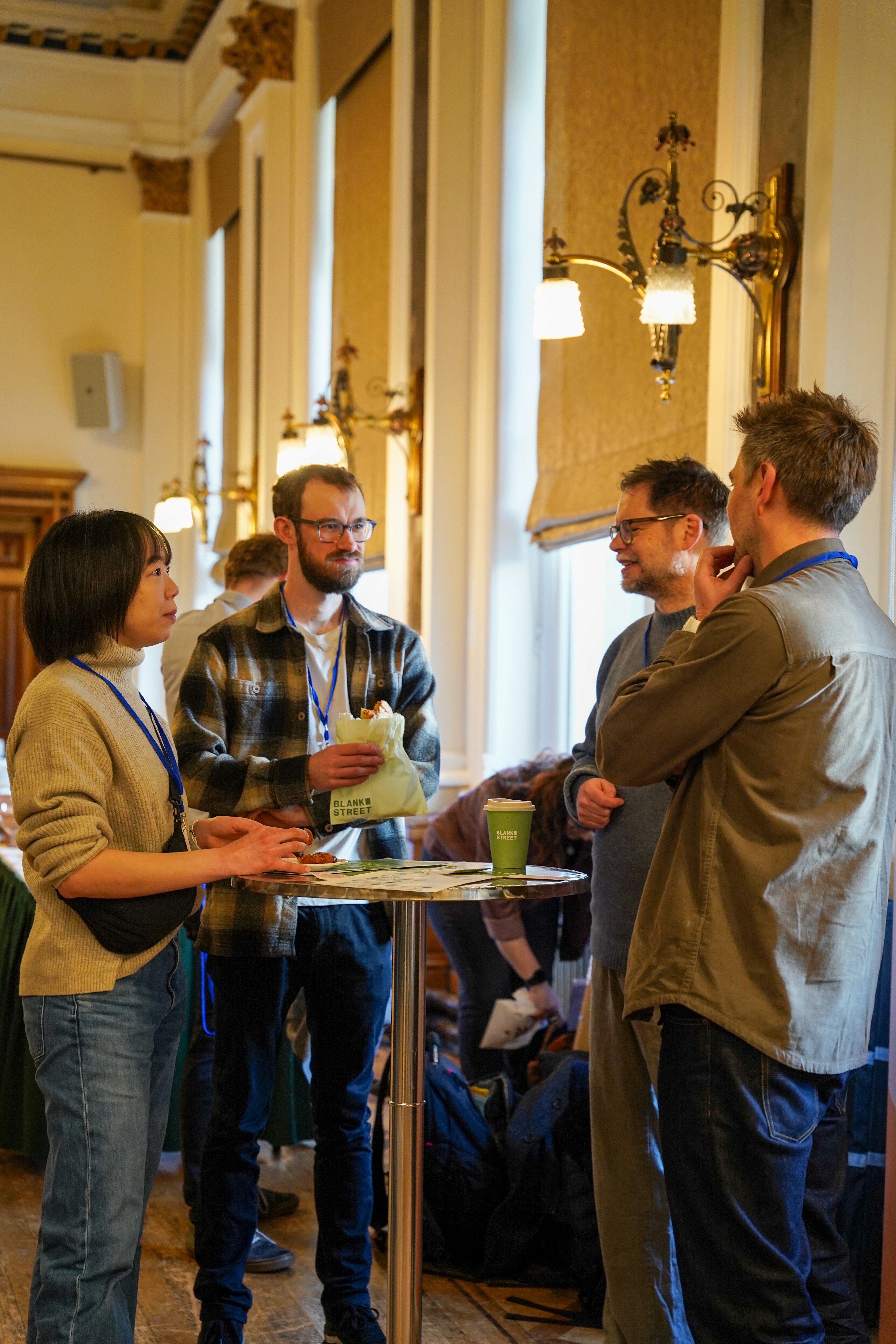
Chatting with attendees and sponsors to understand their experience and opinions of the event. (Photo by Ashlie Camp)
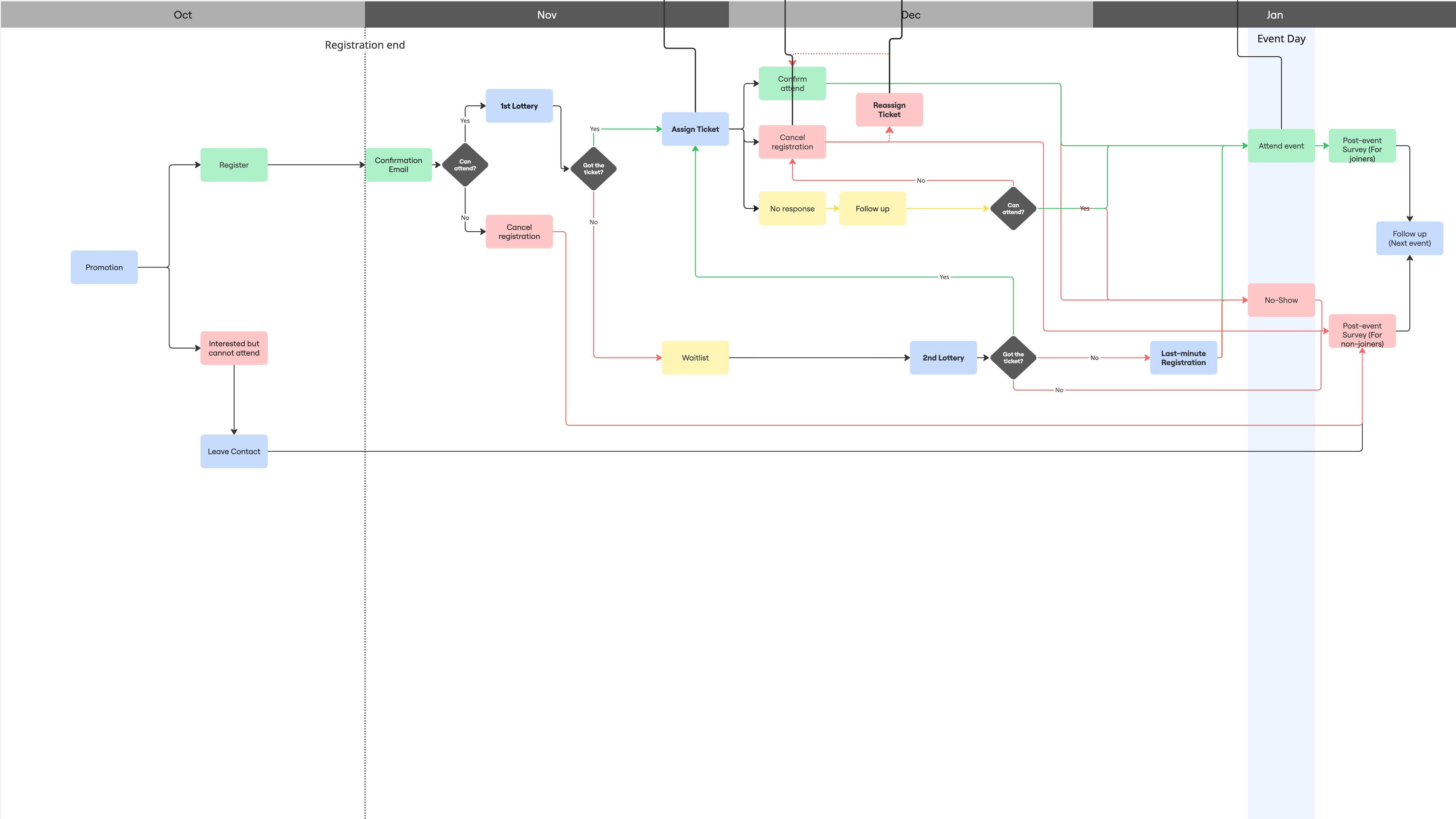
By creating a ticketing user journey, we ensured that accessibility needs were captured at the very first touchpoint, reducing later friction for the attendees.
Outcome and Impact
Turning Conversations into Change
UKGovCamp 2026 was a positive and energising event. People genuinely enjoyed being there, and moving the event outside London helped attract new joiners from across the UK. This brought fresh perspectives into the space and reinforced the value of UKGovCamp as an open, welcoming community rather than a closed circle.
At the same time, the event surfaced important longer-term questions. While the day created meaningful conversations, themes around sustainability, inclusivity, and accessibility continue to matter beyond a single event. If UKGovCamp exists to “make government better together”, it raised a simple but important question: how much impact can we have if we only meet once a year?
Through conversations with stakeholders and attendees, there was growing support for building something that lasts beyond the event itself. A longer-term community could help carry conversations forward, deepen relationships, and turn shared ideas into ongoing collaboration. Before moving in that direction, though, there is still work to do around clarifying purpose, vision, and what collective ownership would really look like.
Overall, UKGovCamp 2026 showed the strength of the community and its appetite to grow. The real impact was not just in delivering a successful event, but in creating space for honest reflection about what comes next and how collective power might be sustained over time.
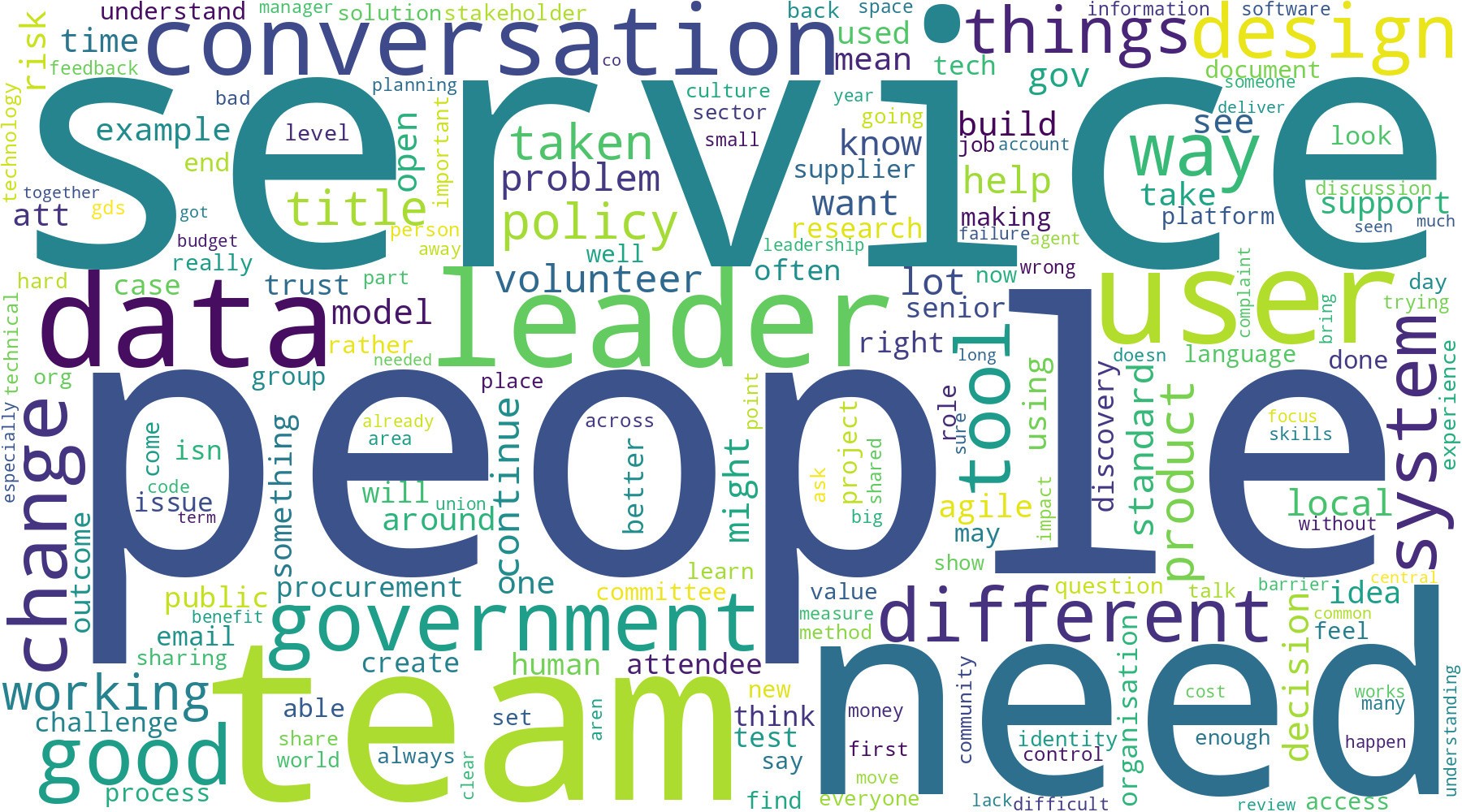
A word cloud that extracts keywords from all the sessions, showing the most discussed topics.
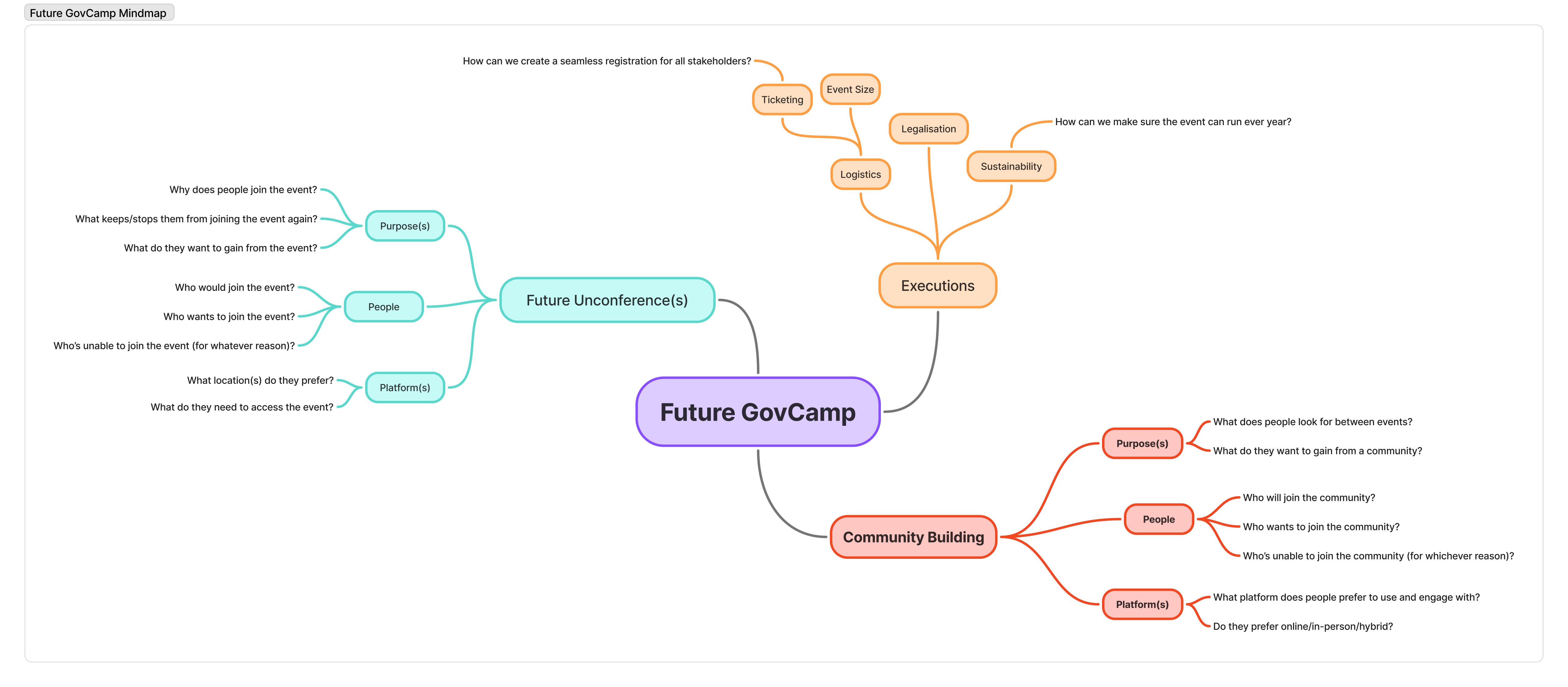
Key Learning
Adapting, Collaborating, Balancing Trade-offs
Joining a team of experienced organisers taught me the value of observing and adapting quickly. My usual design tools, like mind maps and charts, didn’t always land, so I learnt to work with the team’s ways while still keeping my designer perspective to contribute meaningfully.
I also realised that inclusivity and accessibility sometimes they are really hidden. From low-tech options to offering bursary and crèche, every choices can make a big difference in whether people feel welcome and able to participate. Thinking across all these touchpoints for stakeholders reminded me that truly inclusive experiences require attention at every level.
Finally, I learnt that trade-offs are an inevitable part of service design. For example, moving the event to Birmingham attracted new participants but created challenges for some recurring attendees. Service design isn’t just about fulfilling individual user needs; it is about making thoughtful choices, being transparent, and creating conditions that support collective needs while navigating conflicts.