Smile Foundation
Reimagining Rural Healthcare Through Systems Thinking
This project explores how rural healthcare in India could be improved through a community-led, systems-based approach. Focusing on the role of ASHA workers alongside telemedicine and mobile clinics, the work examined the structural, cultural, and organisational barriers that limit access and trust in rural health services.
Through sector research, stakeholder interviews, systems mapping, and co-creation, we developed a flexible service model that integrates preventative care, digital health, and community engagement.
The project demonstrates how understanding local context, power dynamics, and lived experience is essential to designing responsible and scalable healthcare solutions.
Role
Project Lead
Team Setup
5 teammates
Partner(s)
Smile Foundation
Timeframe
May 2025 - June 2025
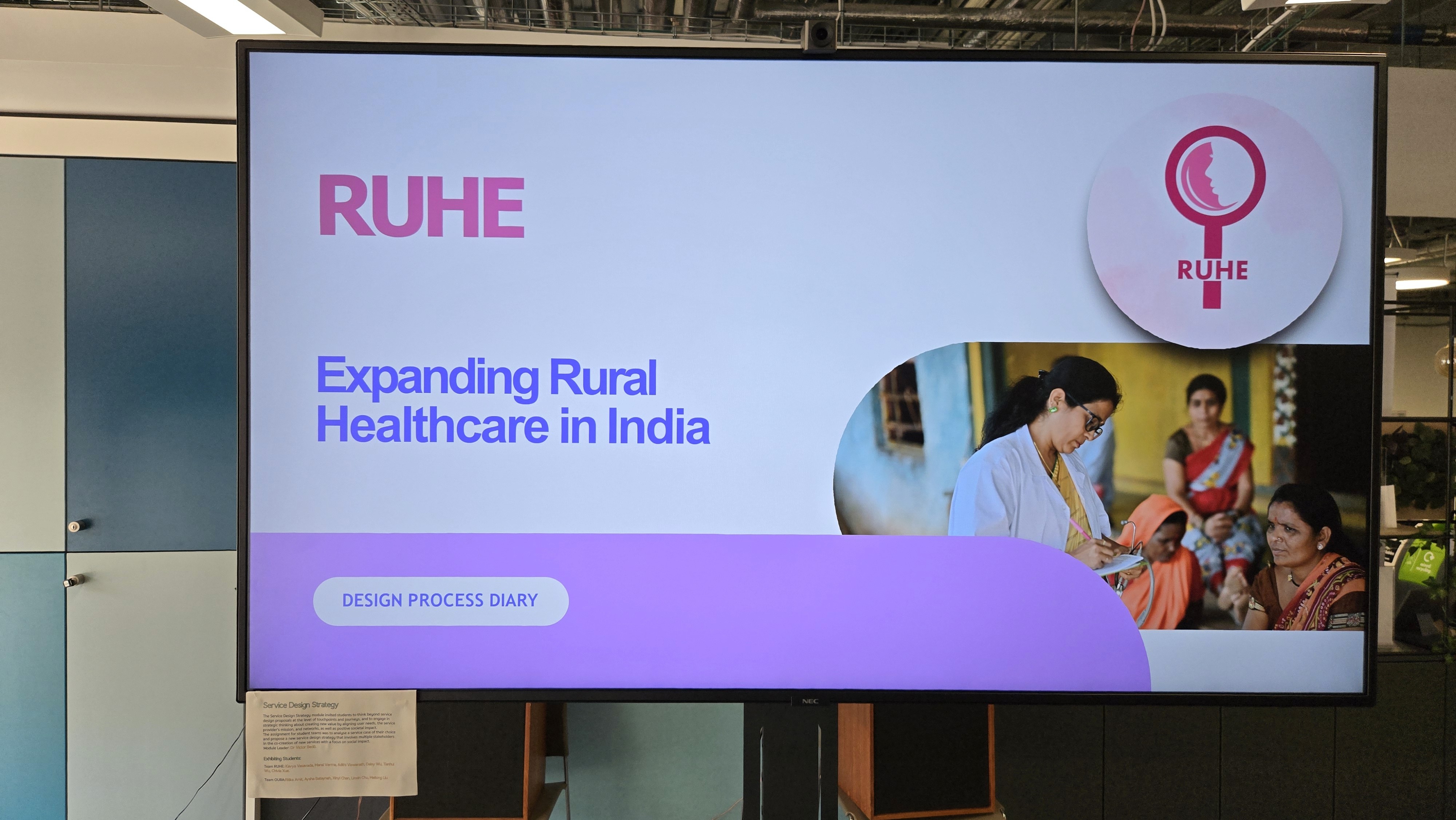
Showcasing our project "RuHe" in an exhibition.
Challenges
When Access, Trust, and Culture Collide
Rural healthcare in India highly relies on ASHA workers (community health volunteers linking rural populations to basic care), telemedicine, and mobile clinics, yet it faces persistent challenges such as inadequate infrastructure, shortages of trained professionals in rural areas, low health literacy, and most importantly, the invisible barrier: trust.
Women and children are particularly affected, with high maternal and child mortality rates and gaps in immunisation and nutrition, often compounded by cultural factors, highlighting the systemic and interconnected nature of these challenges.
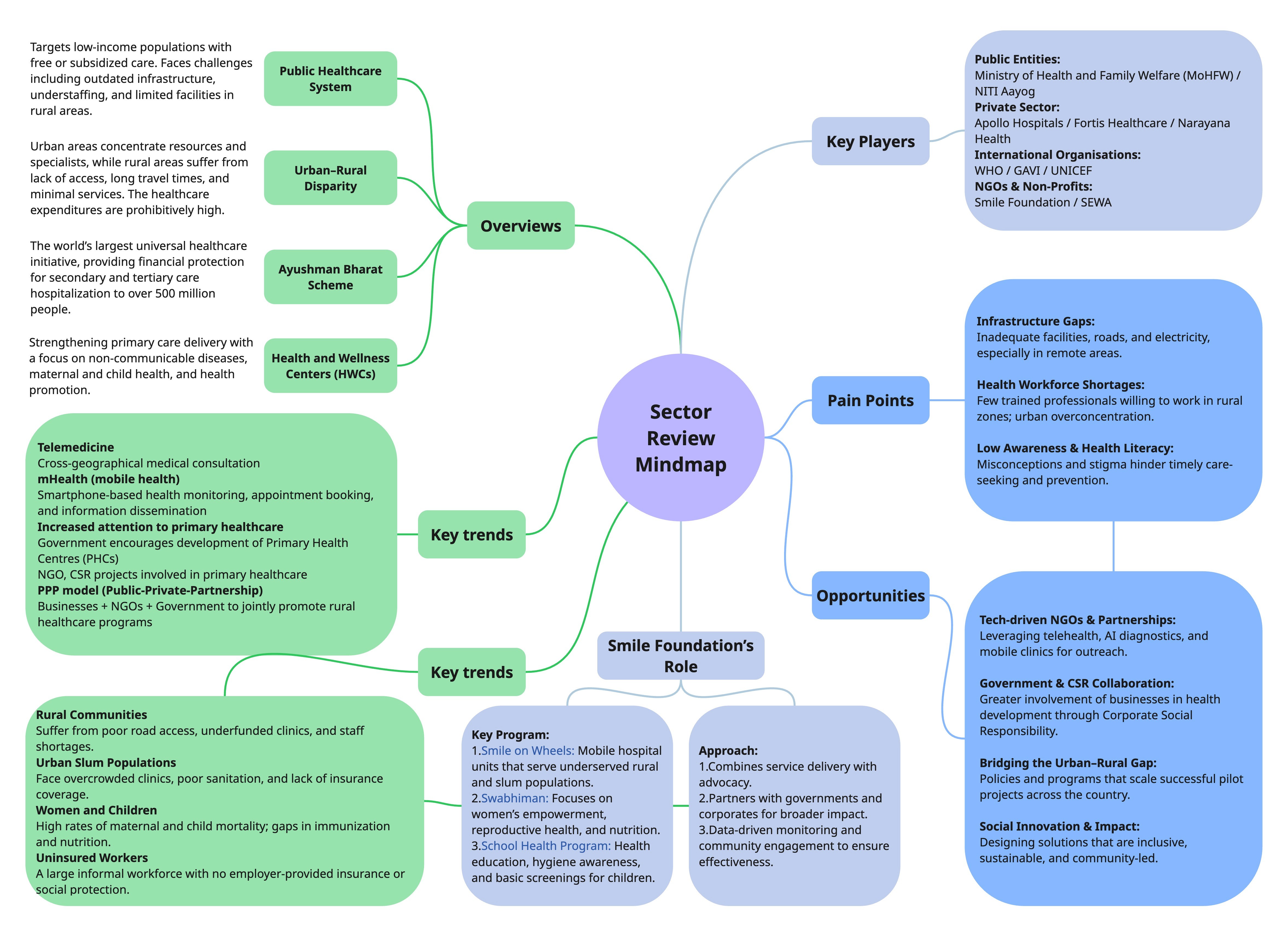
An overview of rural healthcare in India, highlighting key stakeholders, trends, pain points, and opportunities to inform system-level interventions and community-led solutions.
Approaches
Rebuilding Trust and Access Through Rural Health Integration
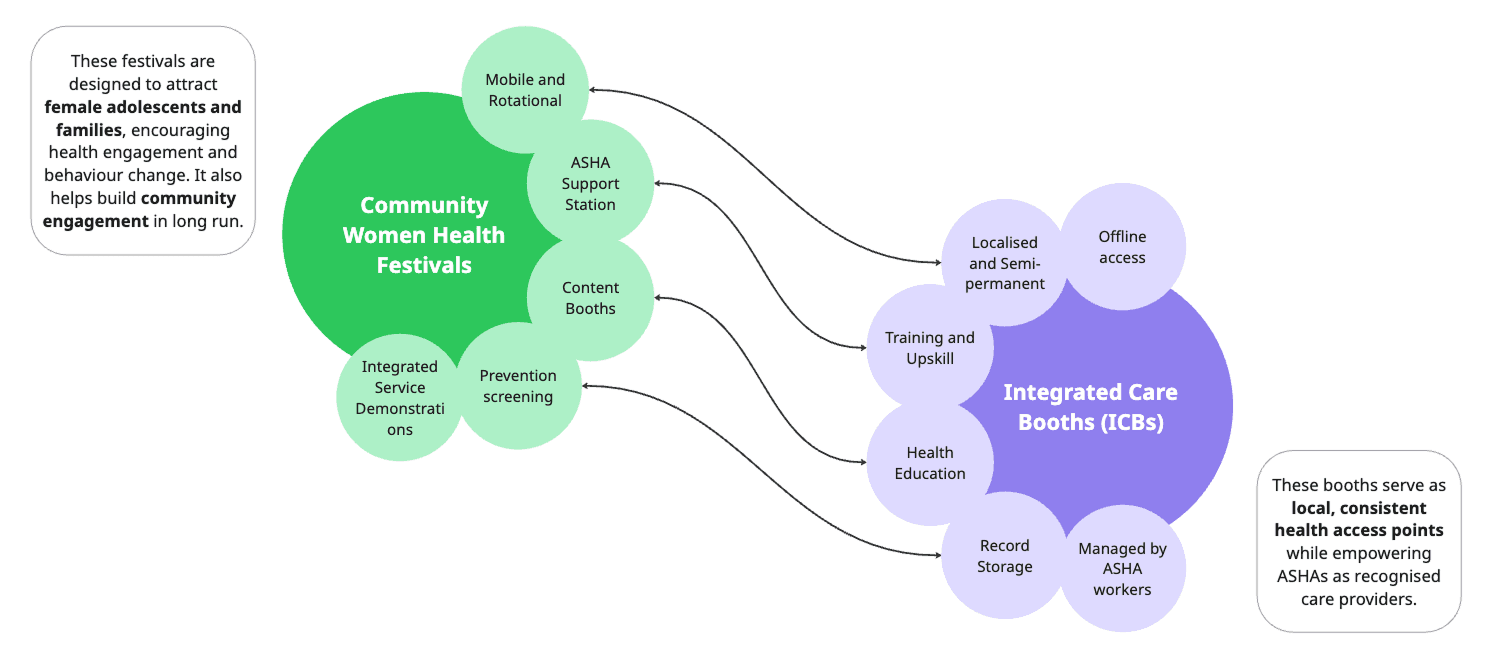
A two-part solution using Community Health Festivals to build awareness, trust, and long-term community capacity, paired with Integrated Care Booths for basic diagnostics and telemedicine to support consistent access to healthcare.
Main Methods
Desk Research (Qualitative and Quantitative)
Stakeholder Interview
Stakeholder Mapping
Service Mapping
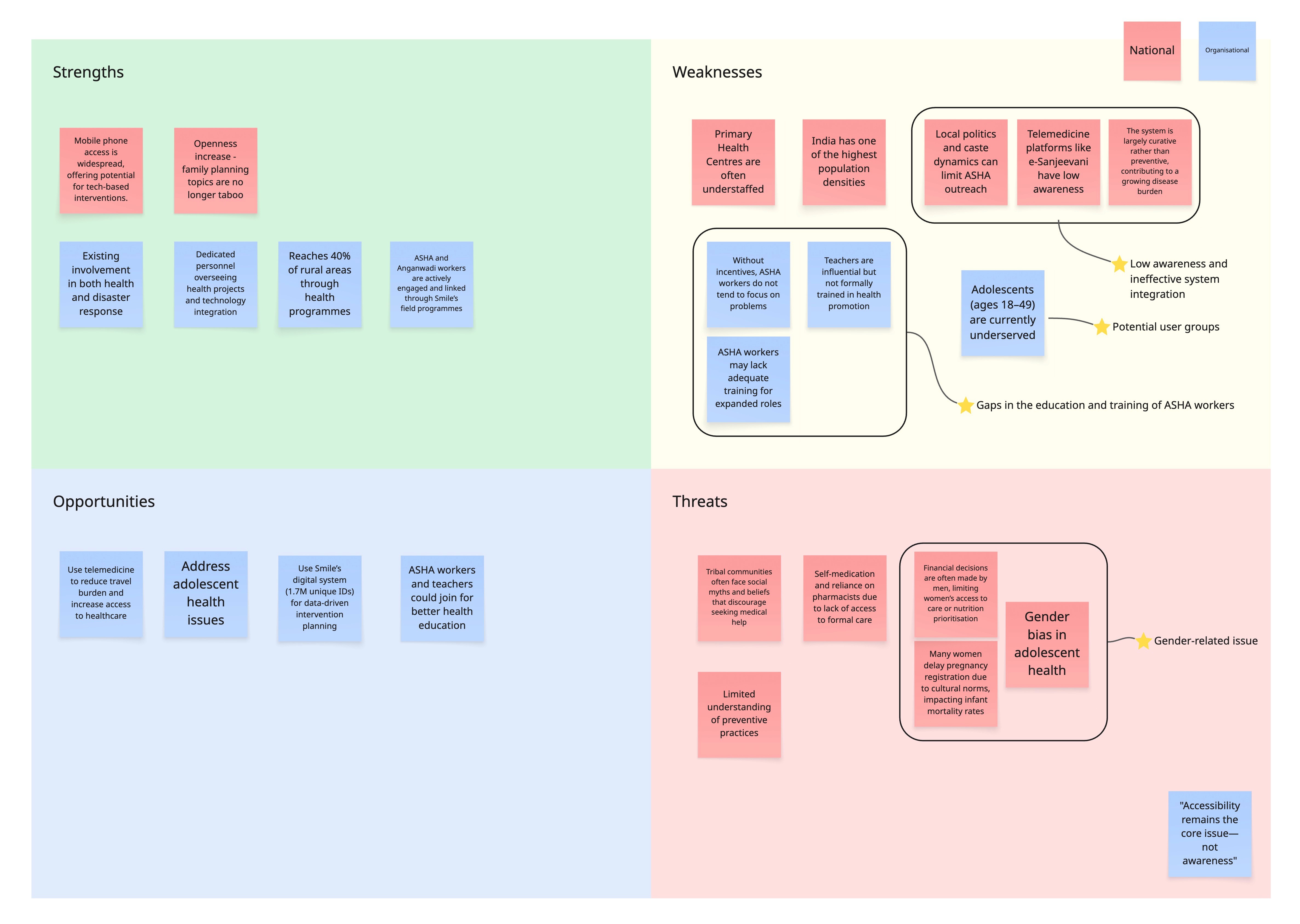
SWOT analysis was used to identify challenges and opportunities, leading to three main themes: low awareness and system integration, gaps in education and training for workers, and gender-related issues.
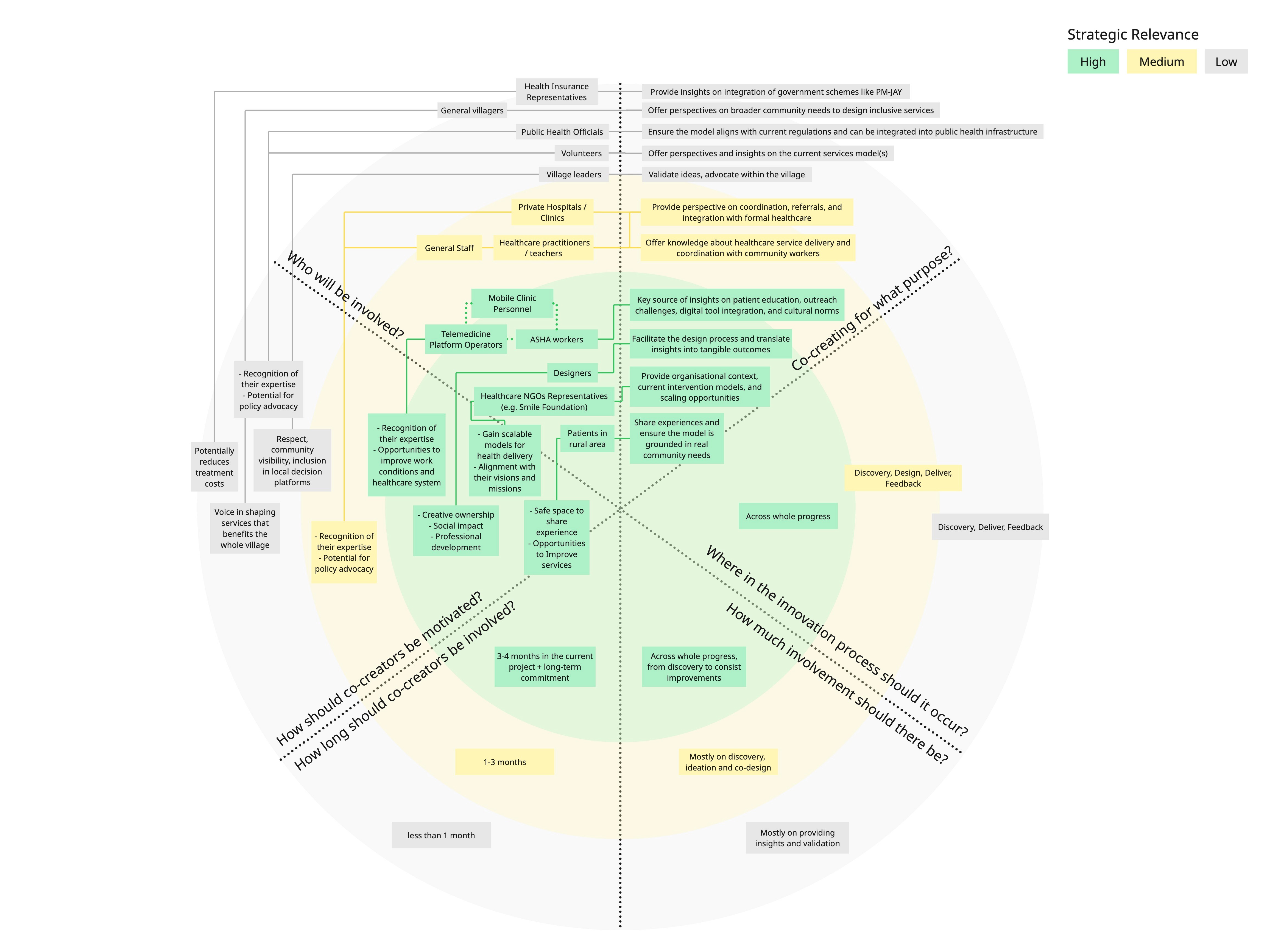
This co-create map combines stakeholders map and service map, showing how different stakeholders contribute to improving rural healthcare over time. It places ASHA workers, telemedicine providers, and mobile clinics at the core, with patients actively shaping services through feedback. Designers facilitate collaboration, while NGOs and institutions support alignment, trust, and long-term delivery.
Outcome and Impact
Enabling Collaboration Across the Rural Health System
This project resulted in a systems-led service model that integrates ASHA workers, telemedicine, and mobile clinics to support more accessible and community-driven rural healthcare. The work produced a co-creation framework that clarifies stakeholder roles across discovery, design, and delivery, helping NGOs and partners understand how to collaborate more effectively within a complex healthcare ecosystem. The model is designed to be flexible and scalable, providing a foundation for future piloting, partnerships, and funding discussions.
Key Learning
Building Cultural and Social Awareness
Working within an unfamiliar cultural and healthcare context reinforced the importance of understanding before designing. I learnt that effective service design across cultures requires deep listening, humility, and respect for local knowledge, rather than applying predefined solutions. Cultural norms, trust, and power dynamics play a critical role in shaping systems, and recognising these factors was essential to designing responsible, community-led interventions. This project strengthened my ability to learn quickly, navigate complex systems, and collaborate thoughtfully across different social and organisational contexts.