Hackney Council
Designing Substance Use Prevention That Embeds, Integrates, and Goes Further
As my master's dissertation, I partnered with Hackney Council to redesign primary prevention partnerships with council teams and local organisations to reduce substance‑related harms.
I carried out desk research and conducted stakeholder interviews, analysed findings, and shaped a proposal that suggests a community-led and integrated approach that could be implemented into the current system and beyond. This work received a high distinction and is being reviewed as the council's future strategy.
Role
Project Lead and Researcher
Team Setup
1 supervisor, 2 organisation representatives
Partner(s)
Hackney Council, Turning Point
Timeframe
March 2025 - September 2025

Photo by John Cameron @ Unsplash.
Challenges
Identifying and Addressing Root Causes
Substance use is a major public health issue in the UK, costing over £20 billion every year. Despite proven benefits, prevention is underfunded and relies on isolated efforts rather than universal and integrated strategies.
In Hackney, this leads to fragmented delivery, missing campaigns, and disconnected systems. My project aimed to identify these gaps and recommend ways to embed prevention more effectively into Hackney’s public health approach.
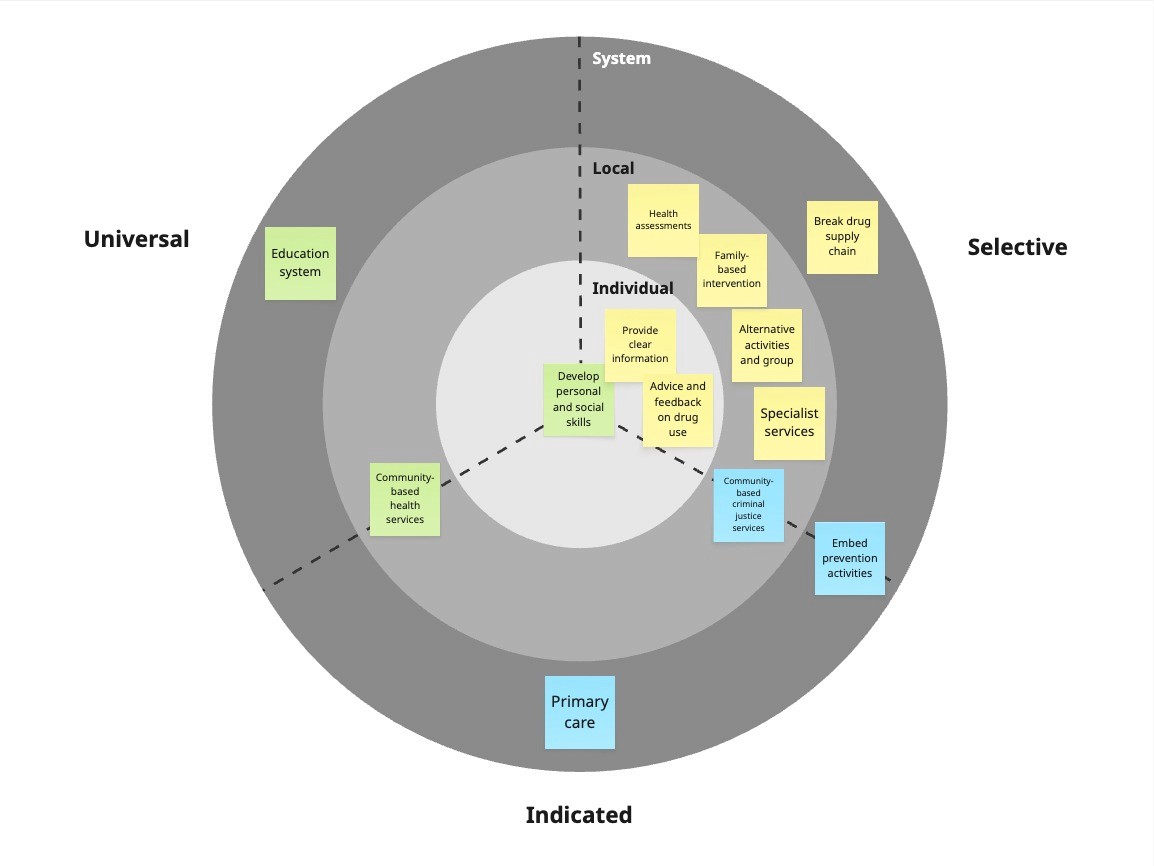
Illustration showing the UK substance use prevention largely centres on selective interventions, with far less focus on universal, whole-population approaches.
Approaches
Digging Into Policies, Organisations and Communities with Data Limitations
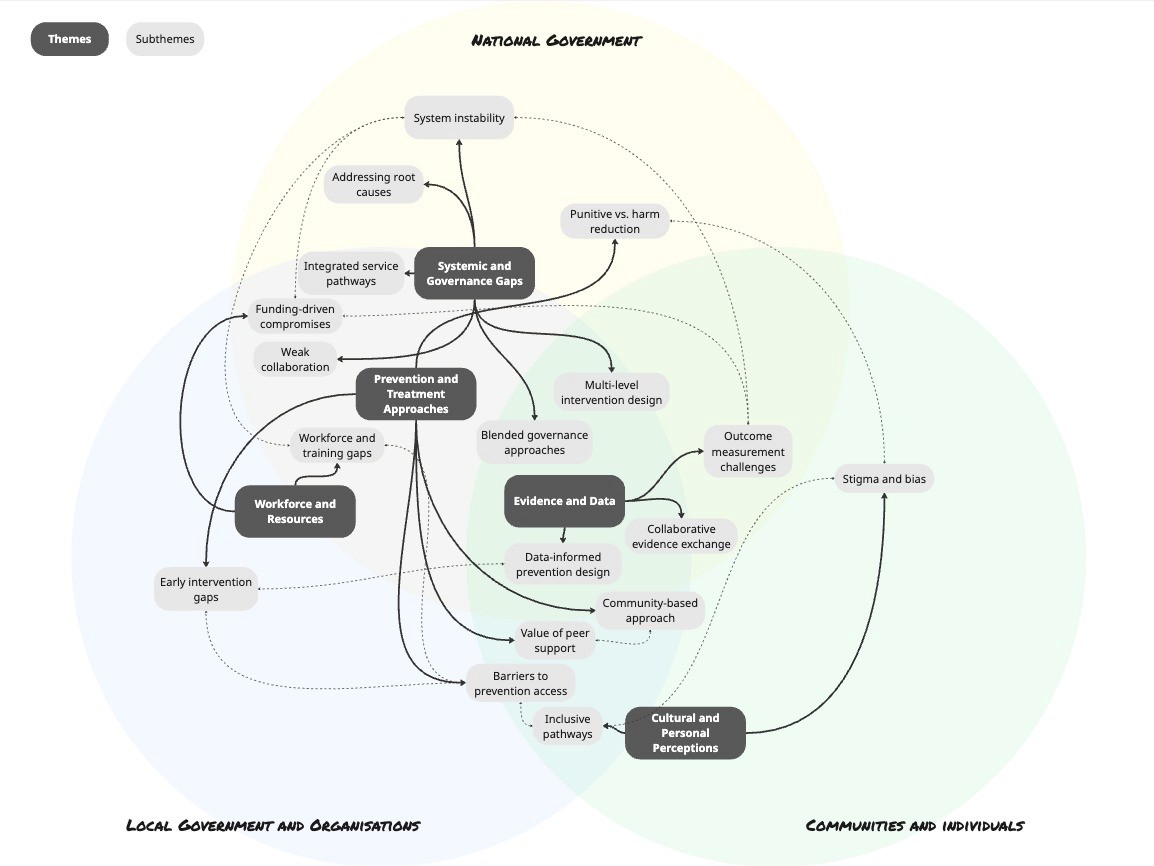
Five main themes and their subthemes are organised across three levels of influence: national government, local government and organisations, and communities and individuals. Solid lines show theme-subtheme links, while dotted lines depict connections across subthemes.
Main Methods
Desk Research (Qualitative and Quantitative)
Policy Mapping
Service Mapping
Stakeholder Mapping
1-on-1 Semi-structured Interview
Thematic Analysis / Grounded Theory
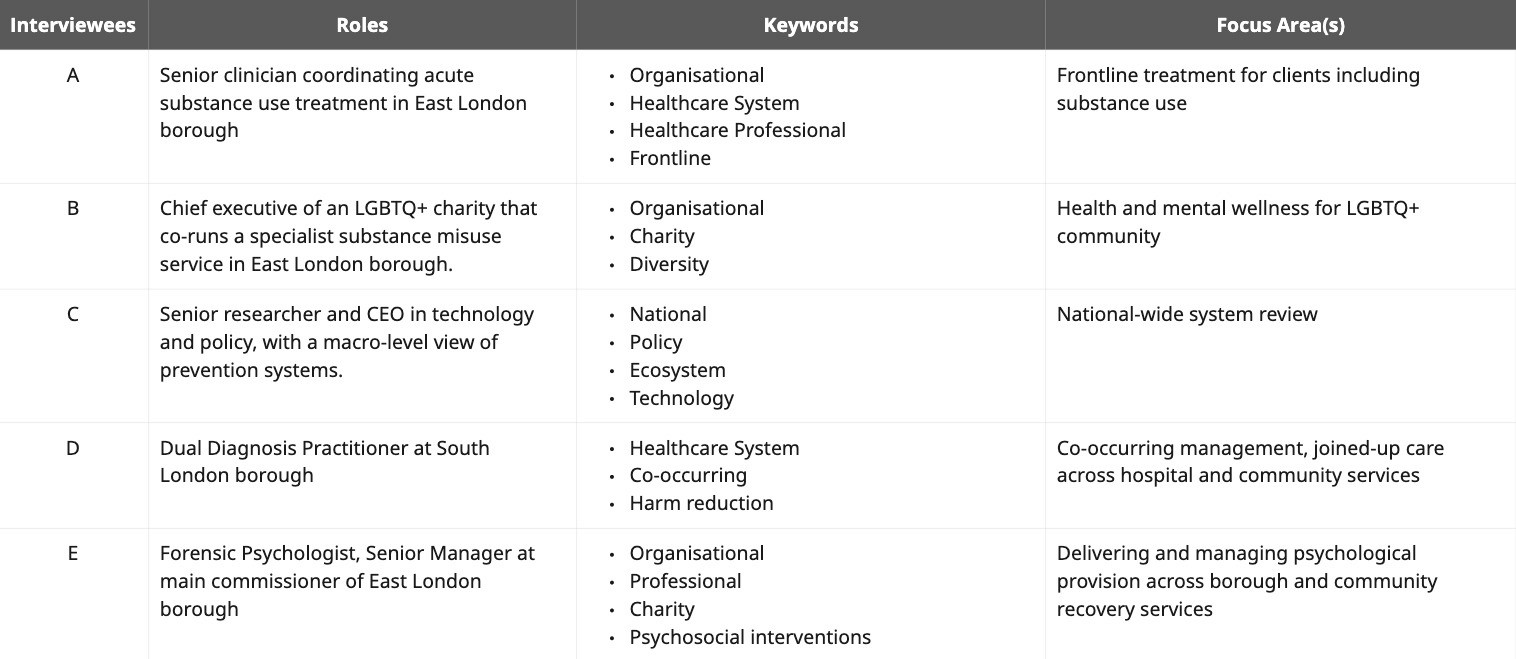
Five interviewees across sectors and occupations.
Outcome and Impact
Driving Real-World Changes Through Adaptive Design
Throughout the project, I navigated real-world constraints by adapting my methods to fit the needs and limitations of the environment using a design approach. I then synthesised the findings into three recommendations. The model is now being reviewed as part of the council’s future strategy.
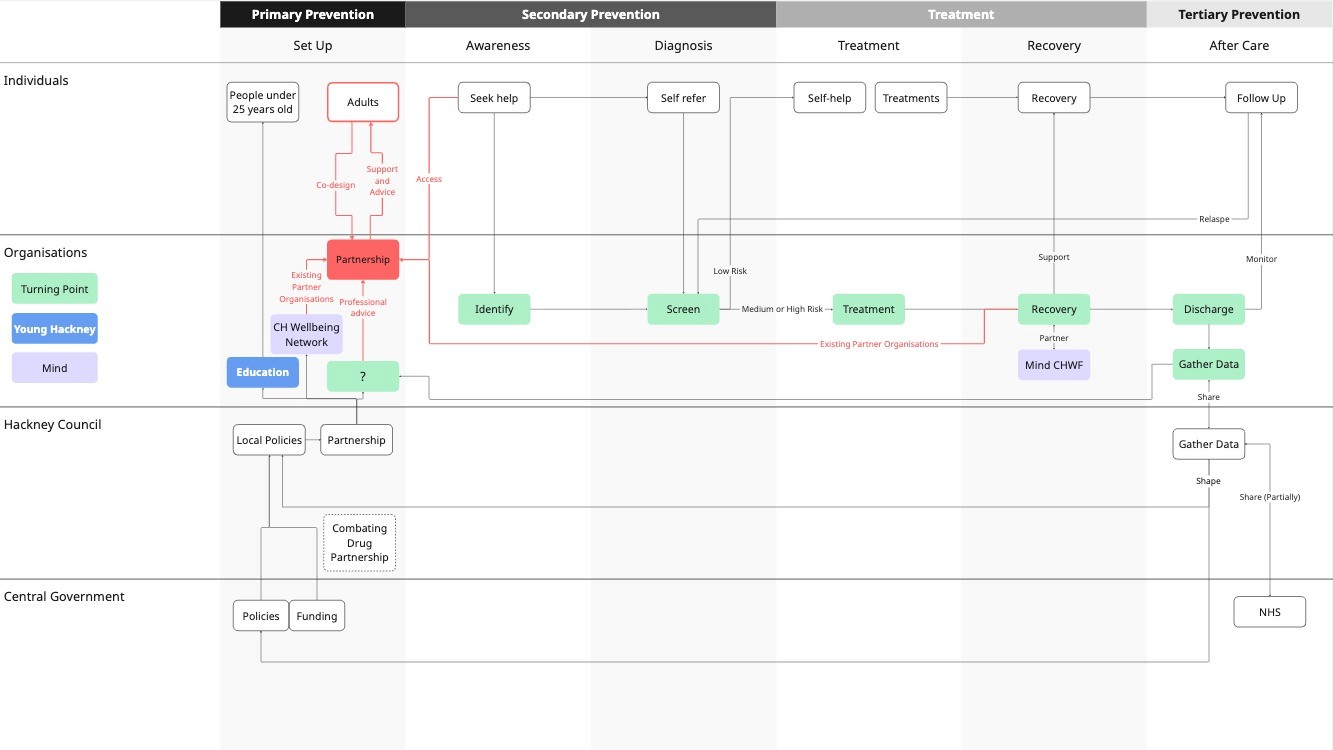
A service map showcasing potential partnership pathways to strengthen primary prevention and early intervention within the system. The updates are highlighted in red and bold lines.
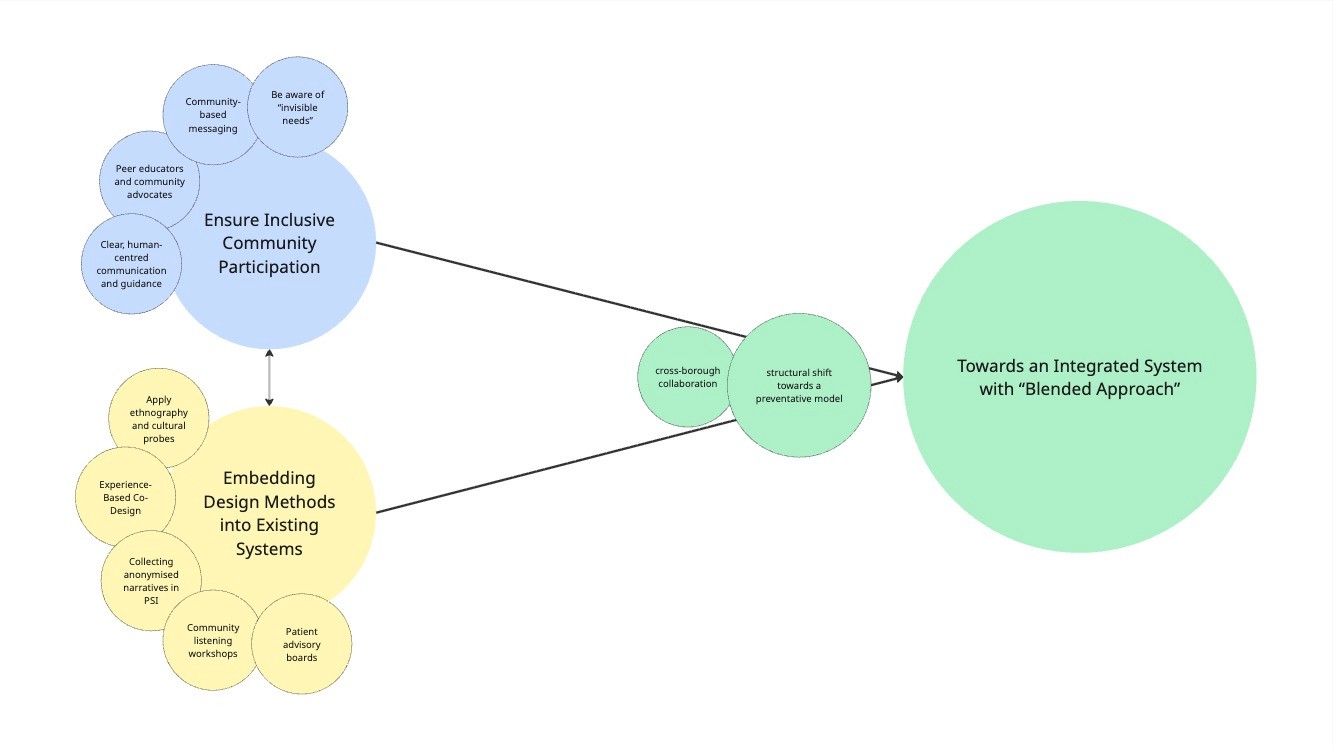
Three design-led recommendations across different levels with actionable plans.
Key Learning
Adapting and Acting in Ambiguous Environments
One of the most valuable lessons from this project was learning how to adapt and work within the limits and the legacy of the system. The noticeable gap in including community voices pushed me to rethink my approach. Since direct access wasn’t possible, I shifted to gathering narratives from public sources and speaking with charity representatives. It wasn’t a perfect substitute, but it allowed me to keep the project moving while still grounding the work in real lived experiences.
A second lesson was accepting that not every problem can be solved, especially when structural barriers make certain changes feel out of reach. My focus shifted to finding the changes that should happen to could happen. Even if they were small steps. Those steps still point towards what a future, more ambitious system could become.
This project taught me how to turn messy, knotty public sector challenges into actionable solutions through a research-led design approach. I learnt to manage ambiguity, maintain momentum with limited resources, and translate academic research into work that is relevant to real organisational needs. It strengthened my systems thinking and my adaptability as a service designer working in complex environments.
“This is a very well-written investigation into a clearly defined area of practice. The dissertation provides a strong overview of a complex field, drawing on a variety of perspectives to create a coherent and insightful narrative. Making sense of such a large and multifaceted body of material is a challenging task, and you have handled it with clarity and rigour. The research methodology is appropriate and thorough, leading to meaningful insights derived from both your desk research and fieldwork.”
Anze Zadel, Loughborough University London