East London Waterworks Park
Delivery as Design: Lessons on Scale, Ownership, and Scope
I led "Green Skills Week", which is a one-week project in collaboration with colleges across East London. Despite limited prior experience in this area, I took ownership of the project and supported students to co-design sustainability-focused water infrastructure concepts for their campuses.
Working within tight time and budget constraints, we prototyped early using existing resources and iterated based on real learner and stakeholder feedback.
The project received strong interest and early momentum. However, after a cross-organisation meeting in early February 2026, the team initiated a reset to ensure the approach was sustainable and deliverable within capacity, which prompted my reflection on community building.
Role
Programme Leader
Team Setup
2 leaders, 30+ volunteers team
Partner(s)
Waltham Forest College, Newham College, Capital City College
Timeframe(s)
April 2025 - February 2026
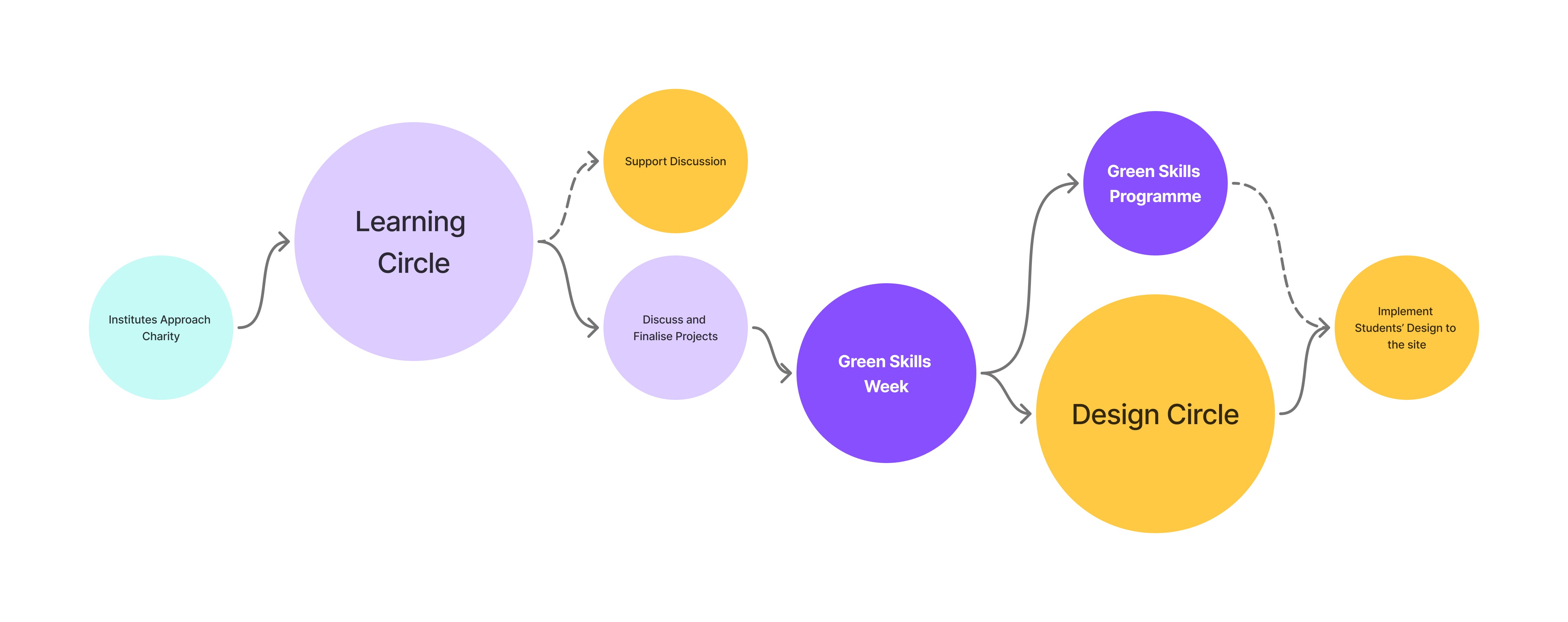
Project overview of Green Skills Week and Green Skills Programme.
Challenges
Green Skills Education With Limited Resources
Young people in colleges often lack access to engaging, practical education around sustainability and green career pathways. While institutions recognise the importance and urgency of environmental issues, they struggle with connecting sustainability learning to real employability skills under the current syllabus.
When I joined the organisation, there was a shelved project about bringing Green Skills to construction students, and I was eager to bring it back to life. The opportunity came sooner than expected, when our team was invited by Waltham Forest College to deliver an employability-focused programme on green skills, but the conditions were far from ideal:
A one-week work experience programme was requested in a very short period, leaving almost no time to design the experience beforehand.
Very limited budget or dedicated resources, meaning the solution had to rely entirely on what already existed, and constructions we can carry on afterwards might be limited.
An implementation challenge, where environmental education rarely translates into real-world opportunities or actionable pathways for young people.
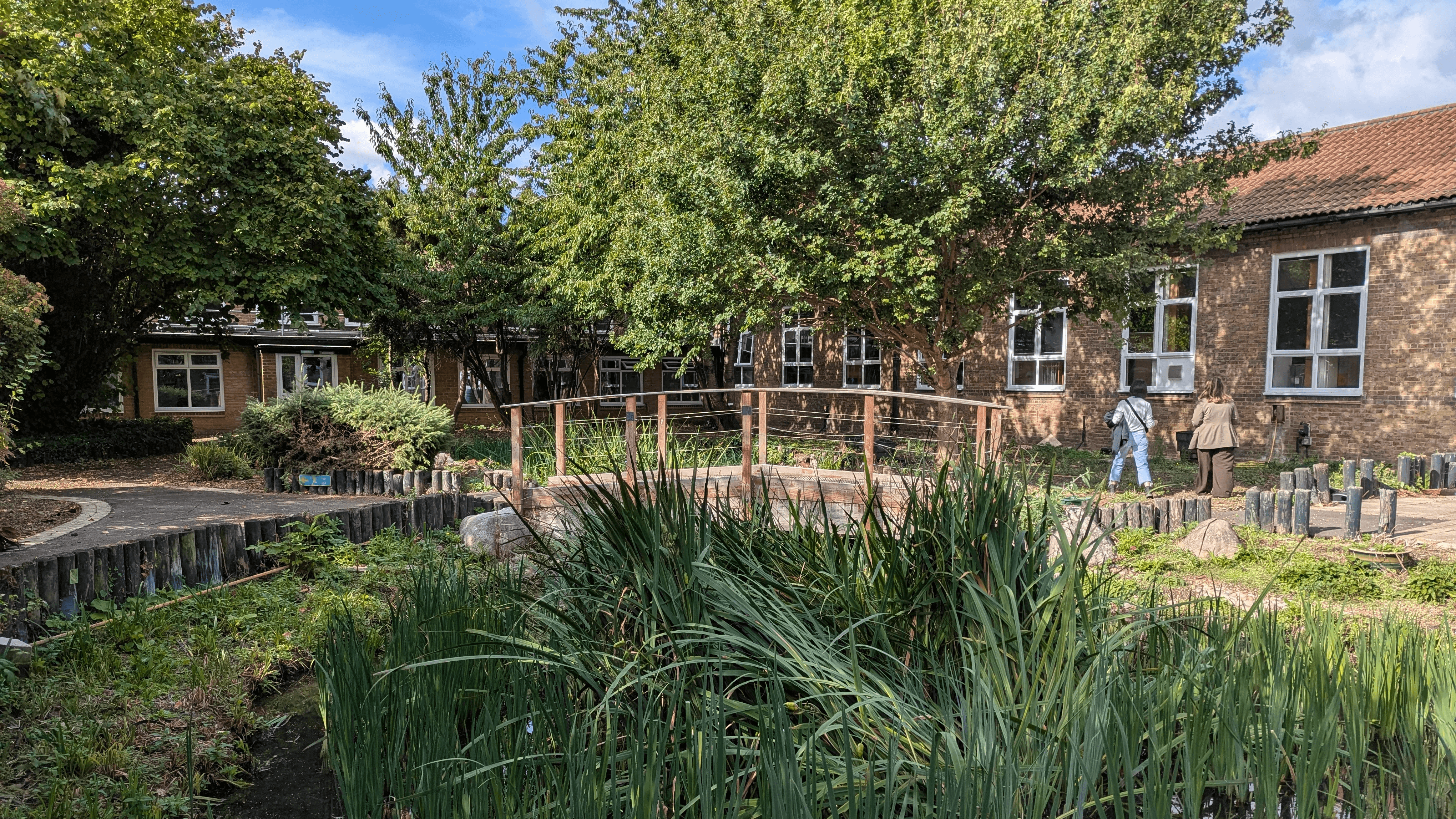
Team members pre-visiting the site. (Credit: East London Waterworks Park)
Approaches
Designing Through Doing: Deliver, Learn, Iterate
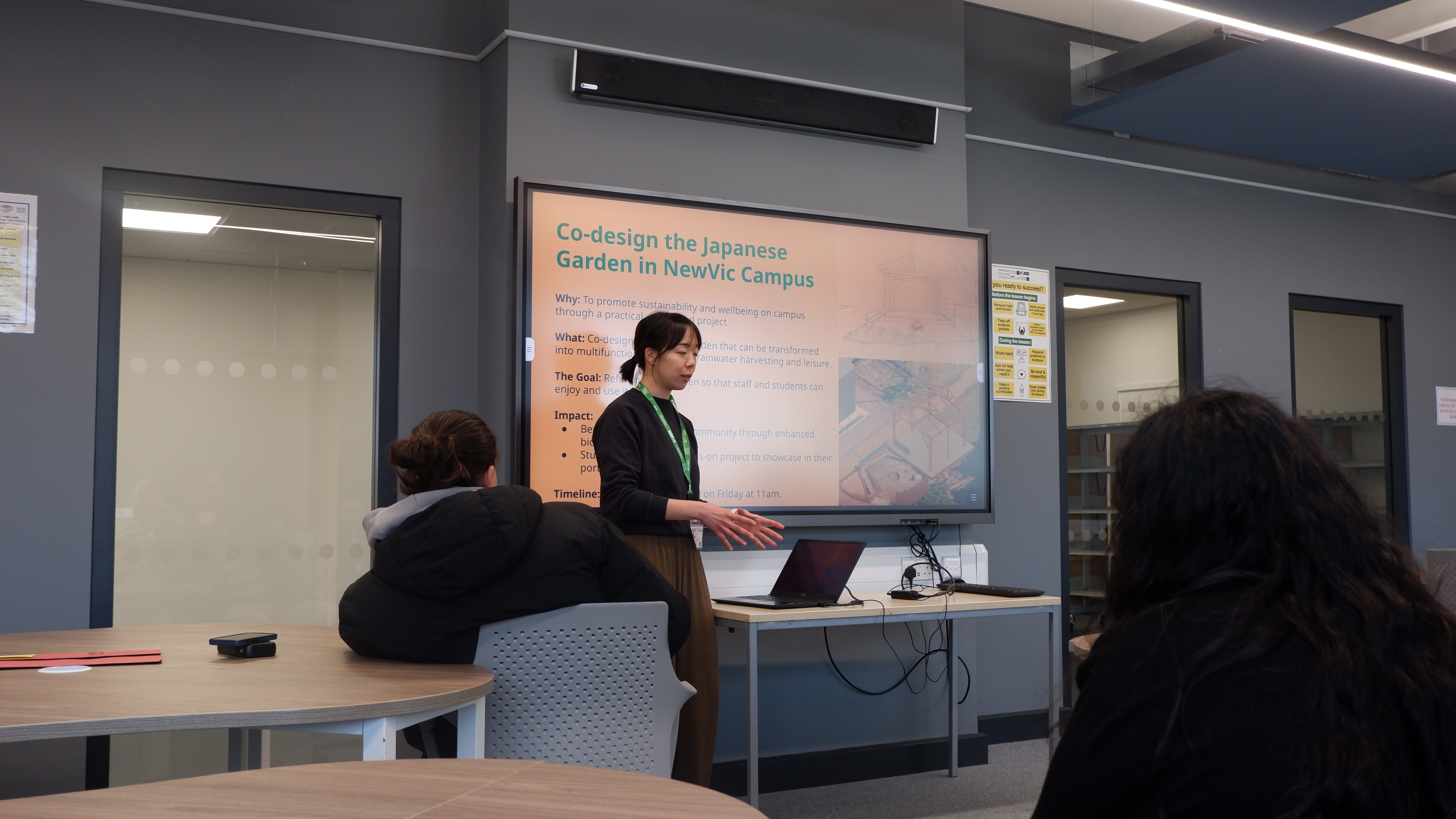
Briefing students on the project and explaining the importance of sustainability.
Main Methods
Experience Prototyping
Co-design Workshops
Ethnography
Stakeholders Research (survey, debrief, conversation)
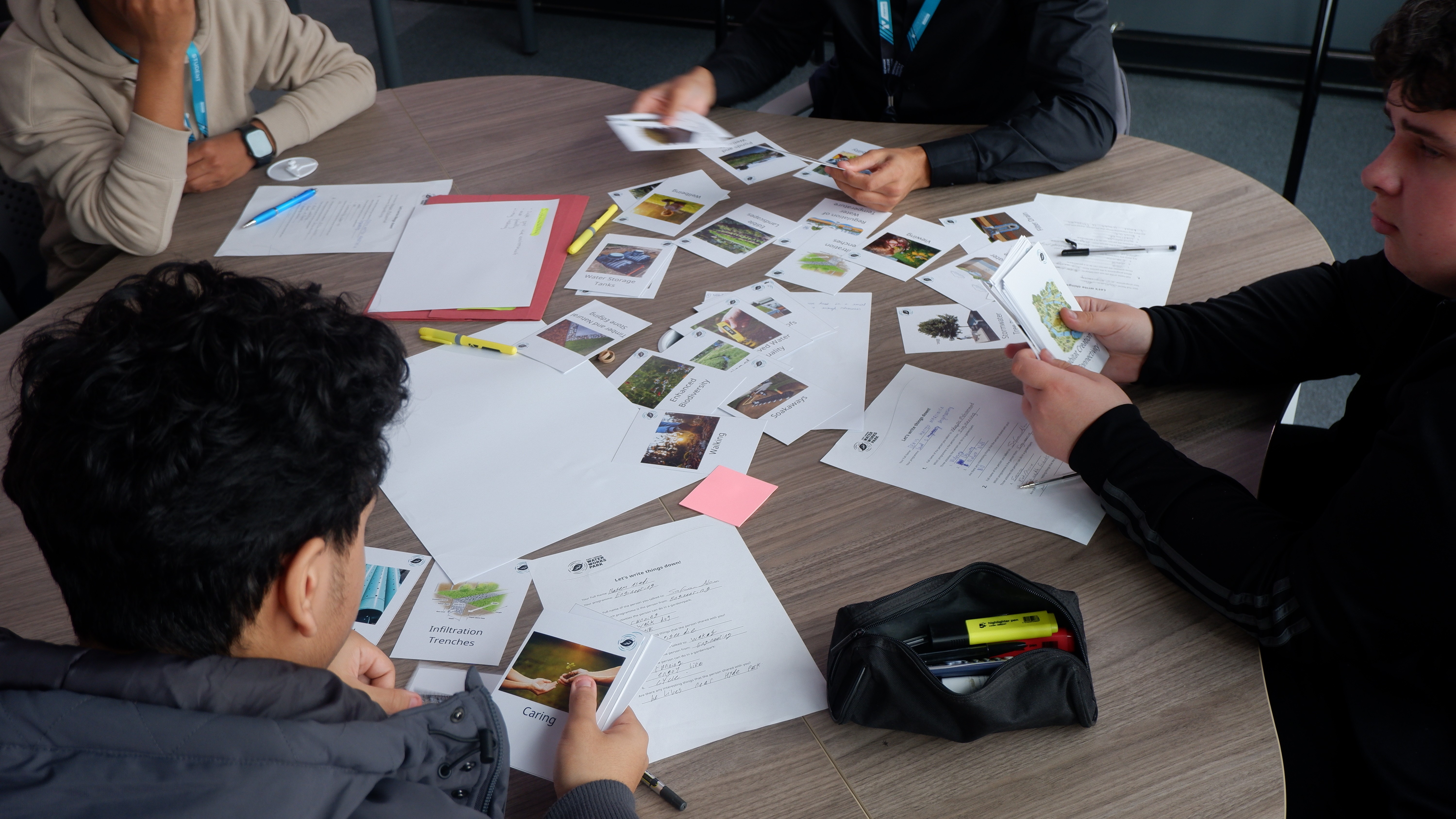
Students using training materials such as cards to understand concepts of sustainable constructions.
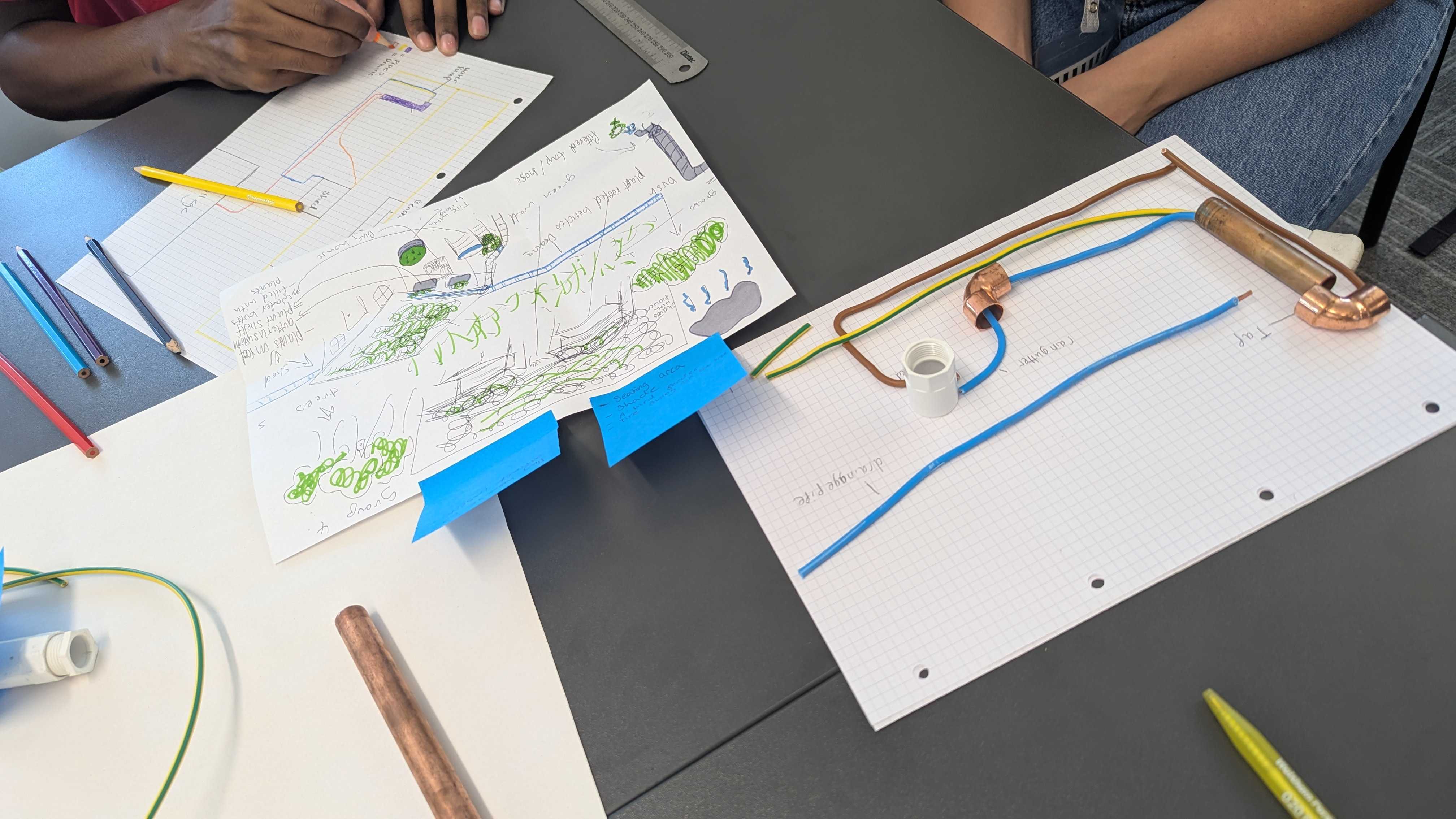
Students prototyping the waterworks system with construction tools such as wires, screws and pipes.
Outcome and Impact
Delivering Proven Impact in Sustainability Education
Students showed a strong improvement in sustainability-related topics in just one week. Post-event surveys indicated a 30% to 50% increase in their sustainability knowledge, along with a noticeable rise in their interest in pursuing sustainability-focused projects in their future careers. Many teams went beyond the brief (design waterworks facilities) and came up with new ideas, from creating community recycling schemes to building co-exist habitats, which could be implemented on the campus and nearby areas to create long-term benefit for the community.
These outcomes have become high-value evidence of impact. The case studies now directly support our efforts to secure external funding, strengthen partnerships with colleges and local sustainability networks, attract new collaborators, and scale the organisation.
Although the project was paused at this moment, it served as a critical case study for stakeholders on the vital balance between rapid scaling and systemic sustainability.
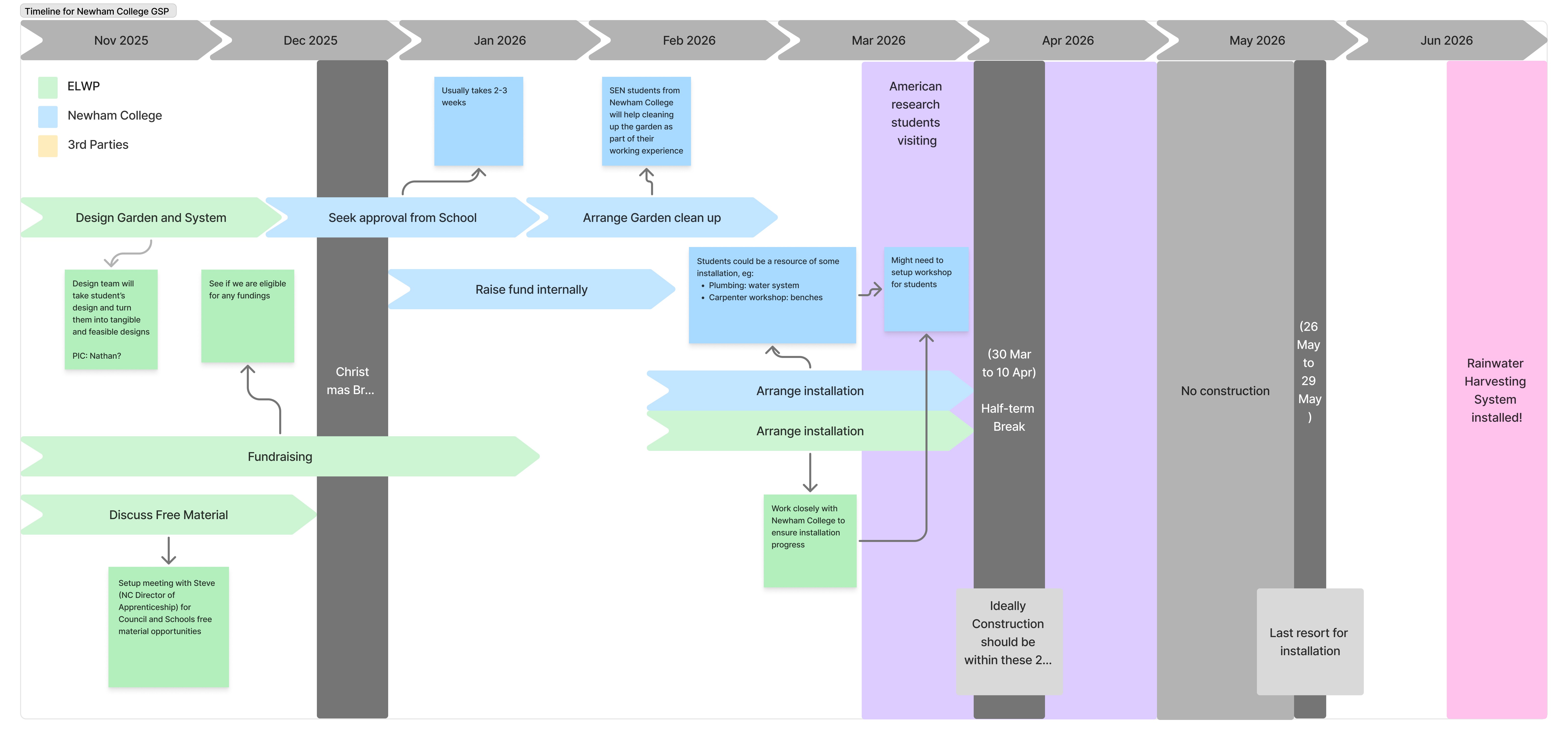
Project timeline for stakeholders.
Key Learning
Part 1: Strengthening Adaptability and Collaborative Design Skills
This project strengthened my ability to design participatory learning experiences and guide non-designers through a clear creative process. For many students, co-design was a completely new concept. Some didn’t understand why the process mattered at first, and it took time and effort to explain it and guide them through it. However, as the project went on, we can clearly see how the progress gave students a real sense of ownership and boost their confidence.
One of my favourite parts was seeing the power of collective creativity in action: students started coming up with ideas we hadn’t even considered after a discussion with their team, facilitators added their own twists into the workshops, like bringing construction materials so learners could build hands-on prototypes. It was a reminder of how collaborative design can create energy, confidence, and genuinely fresh ideas.
My biggest personal takeaways was learning to adapt design methods with flexibility and dive into a new and unfamiliar topics in a short time. I had to read extensively, consult external sources, and ask for expert help to make sure the content was meaningful and technically sound. This process sharpened my ability to learn quickly from others and collaborate across disciplines, skills I now carry into every project.
Managing multiple stakeholders (students, teachers, school heads and directors, and volunteers) also taught me a lot about balancing different needs and decision making, which sometimes meant making decisions that didn’t satisfy everyone or making trade-offs to keep the programme feasible.
Part 2: When Momentum Outruns Structure
This project began as a tactical improvement but evolved into a full-scale system revamp. While the vision was meaningful, the rapid expansion outpaced our internal capacity. This experience reinforced a vital truth when running a pilot: we must design the "how" as carefully as the "what" in the following ways:
Protecting Purpose: Managing the shift from a "small fix" to a "major overhaul" requires clear shared vision, solid ownership, and constant communication to ensure the project doesn't grow beyond its available resources.
Knowledge Resilience: Ensuring that when key people move on, the service has the internal structure to maintain its direction without becoming dependent on external surge capacity.
Sustainable Scaling: Recognising that true service design isn't just about growing fast; it is about balancing creative vision with practical constraints to ensure a project remains both inspiring and achievable.
“Green skills are important for Waltham Forest College as we are already taking a range of actions to improve the environment. This week has been no exception, seeing students apply their skills to environmental challenges. Green Skills Week has shown just how powerful hands-on learning can be in building confidence in students while equipping them with practical, lifelong green skills to support future employability, and thanks to East London Waterworks Park, making a deeper connection to our local green spaces. We look forward to continuing to work with East London Waterworks Park.”
Jill Nathan, Head of Employability, Waltham Forest College